

The Fundamentals of Mobile-first Casino Design

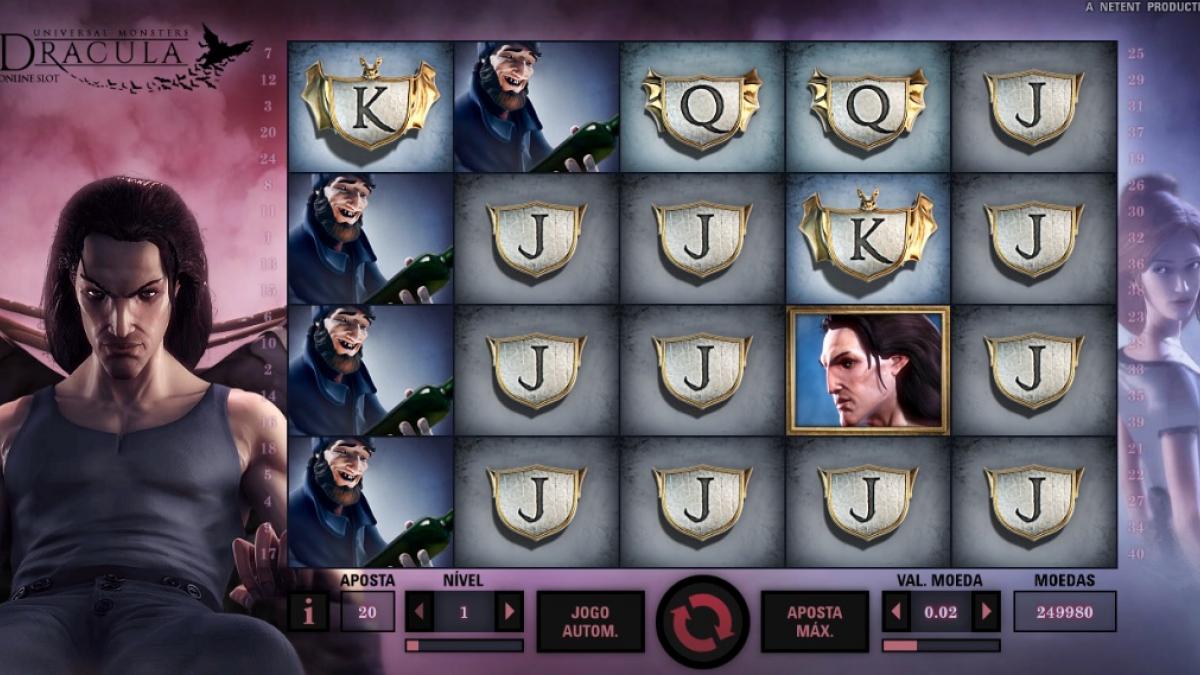
Creating a current online casino platform kicks off with a basic question: how do we create the mobile experience the primary one? Not whether to support phones—that’s a fact. In Canada, smartphone penetration stands above 85%, and a rising share of real-money gaming takes place during commutes, on lunch breaks, or from the couch. At draculacasino ios app, we’ve transformed our whole design philosophy to treat the small screen as the principal canvas, not an afterthought. That means redesigning navigation, load times, touch targets, and even the way we showcase game lobbies. A mobile-first approach does not focus on compressing a desktop site; it’s about crafting an interface that feels native to the device in a player’s hand. We’ll explore the basic ideas that render a casino app easy-to-use, fast, and genuinely enjoyable to use, without ever sacrificing the depth of the gaming library.
How Mobile-First Thinking Is Important in Online Casinos

Player behaviour has changed irreversibly. We see session lengths on smartphones that are more compact but more frequent than on desktop, so every second of friction costs engagement. A mobile-first design recognizes that the user might be interrupted at any moment, meaning the experience must be instantly resumable. We also know that mobile users are often on cellular data, making them more sensitive to heavy downloads and sluggish menus. By emphasizing mobile constraints from the start, we sidestep the trap of building a bloated desktop interface and then trying to strip it down. This approach results in cleaner code, faster iteration, and a more consistent brand experience across all devices. For a casino like Dracula Casino, where trust and speed are paramount, mobile-first thinking directly influences retention and player satisfaction in a competitive Canadian market.
Fundamental Principles of Mobile-First Casino Design
Our design approach rests on a few essential tenets. We highlight the most frequent features—preferred slot, balance check—above all else. We account for disruptions by preserving state in the background, so a user resuming after a call discovers their session in the same state. Performance is a feature, not a technical requirement; the app must load in within two seconds on a 4G link. Any slower performance raises concerns. We embrace progressive disclosure, showing complex filters or options solely when a user requires them. These rules keep the layout calm and uncluttered, which is highly relevant when actual money is involved and decision-making must be clear-headed.
Security and Profile Control on Smartphone
Security expectations are heightened on portable devices because handsets are more likely to be lost or used by others. We integrate biometric verification—fingerprint and face scanning—so authenticating is more rapid and more protected than typing a passcode. The payment section is optimized for mobile, with large confirmation buttons and transparent withdrawal status indicators that are viewable at a quick look. We never store confidential financial details on the handset itself; all operations are converted to tokens and coded in transit. Two-factor authentication can be completed with a simple touch if the gambler uses an authenticator app. By designing these protection workflows with portable device convenience in mind, we reduce the temptation for users to take shortcuts that could compromise their balances, reinforcing the confidence that is essential for any Canadian-facing casino company.
Thumb-Friendly Navigation, Not Point-and-Click
We’ve found that the most comfortable touch zones on a smartphone are grouped near the bottom of the screen and along the sides for right-handed users. Placing critical controls—the cashier, game search, lobby shortcuts—within natural thumb reach minimizes effort and expedites common tasks. We avoid burying key functions inside hamburger menus unless absolutely necessary, because every extra tap increases the chance of a player quitting the flow. Instead, we utilize a persistent bottom tab bar that reflects the simplicity of the best consumer apps. Labels accompany icons to eliminate guesswork, and we provide haptic feedback on supported devices to confirm taps. This thumb-friendly architecture makes the Dracula Casino app feel reactive and physically pleasant during extended play sessions, whether a player is spinning slots or checking live dealer tables.
Creating for One-Hand Play
We understand that many players engage with their phone using only one hand while holding a coffee or commuting. To support this, we locate the most frequent actions in the lower half of the screen and guarantee that back buttons and close icons are large enough to tap without changing hold. We also prevent placing destructive actions, like confirming a withdrawal cancellation, in thumb hotspots where accidental taps could lead to annoyance. Every placement decision is evaluated on a range of hand sizes using physical device prototypes. This attention to ergonomics may seem minor, but in a casino environment where focus should be on the game itself, eliminating physical discomfort maintains the player in a relaxed state of mind.
Practical Thumb Zone Mapping
We divide the screen into three zones: natural, stretch, and hard-to-reach. Natural zones receive primary navigation and the spin button in slot games. Stretch zones contain secondary controls like autoplay settings or sound toggles. Hard-to-reach corners are kept for infrequent actions such as viewing the terms and conditions or logging out. This mapping isn’t theoretical; we validate it through heatmap recordings from real sessions. The result is an interface where a player rarely needs to shift their hand, lessening muscle fatigue during longer sessions and rendering the app feel effortless to navigate.
Visual arrangement and Legibility on Mobile Devices
On a limited viewport, every pixel must prove its worth. We establish a distinct information order so that the most important information—account balance and active promotions—catches the eye first. Typography is adjusted using a modular system that keeps body text no smaller than 16 pixels to avoid zooming. Contrast ratios meet WCAG AA standards, making sure that white text on dark backgrounds remains legible under bright sunlight. We employ color selectively to emphasize calls-to-action, while the general color scheme stays muted to avoid visual fatigue. In the game lobby, we use large, clear icon graphics rather than dense text lists. This approach allows users to browse dozens of titles quickly and continue from their last spot without causing eye strain.
Cross-Device Compatibility and Validation
Mobile-first does not mean exclusively mobile. We guarantee that the Dracula Casino app provides a unified experience across iOS and Android, as well as on tablets and foldable devices that are gaining popularity in Canada. Our design system uses flexible breakpoints that tailor the layout to different aspect ratios without disrupting the visual rhythm. We evaluate on a device lab that includes older models like the iPhone SE and budget Android phones to guarantee that performance is comprehensive, not just high-end-oriented. Automatic regression tests operate on every build to catch layout shifts or touch target conflicts. This rigorous compatibility work ensures a player can initiate a session on their phone during a commute and continue on an iPad at home without ever experiencing a jarring transition.
Performance Optimization for Real-Time Play
Quickness is the silent ambassador of a casino brand. We define a strict performance budget for the Dracula Casino app, ensuring that the initial shell loads in under 1.5 seconds on mid-range devices common in Canada. We accomplish this through code splitting, lazy loading of game assets, and an robust caching strategy that stores static resources on the device after the first visit. Image compression is calibrated to balance visual quality with file size, and we use modern formats like WebP with JPEG fallbacks. Server response times are kept low by deploying edge nodes close to major Canadian cities. When a player taps a game tile and sees the reels appear almost instantly, their assurance in the platform’s reliability grows. A slow app, by contrast, can make even a legitimate casino feel unreliable.
Touchscreen-Ready Game Interfaces
Porting a slot or table game to a mobile screen demands more than scaling down the artwork. We work with game providers to guarantee that buttons are at least 48×48 density-independent pixels, the suggested minimum for reliable touch targets. Spin buttons are enlarged and located where a thumb typically rests. In live dealer games, we place betting chips in a fan layout that can be dragged and dropped without obscuring the video stream. We also disable hover states that have no equivalent on touchscreens, replacing them with explicit tap-to-select interactions. These adaptations prevent mis-taps that could lead to unintended bets, a critical consideration when real money is on the line. The outcome is a game that seems like it was designed on mobile, not poorly transplanted.
Adjusting Complex Table Games
Games like roulette and blackjack pose unique challenges because they include multiple betting positions and decision buttons. We address this by using a collapsible betting panel that slides up from the bottom, leaving the table visible. Players can put chips, modify stakes, and approve bets without covering the action. For blackjack, we expand the hit, stand, and double buttons and separate them widely to avoid fat-finger errors. These design choices are informed by session recordings where we saw exactly where hesitation takes place. By eliminating those moments, we keep the game moving at a steady pace.
How Dracula Casino App Embodies Mobile-First Design
We created the Dracula Casino app entirely using the guidelines outlined above. The download process is streamlined, with a lightweight installer that downloads only what is needed for the player’s device. Once inside, the lobby presents a curated set of games designed for mobile play, with filters for touch-friendly table games and portrait-mode slots. Our bottom navigation bar gives instant access to the game lobby, promotions, cashier, and support, all within thumb reach. We regularly monitor real-user metrics such as time-to-interactive and tap success rates, integrating that data back into our design sprints. The app supports Canadian English and French, and payment methods widely used across provinces are presented prominently. By treating mobile as the primary platform, we offer an experience that seems cohesive, fast, and considerate of the player’s time and attention.
- Lightweight installer customised to device capabilities
- Handpicked mobile game lobby with touch-optimised filters
- Constant bottom navigation for one-handed access
- Biometric login and tokenised payment flows
- Ongoing performance monitoring and iterative updates
Future-Proofing the Mobile Casino Experience
Mobile technology evolves quickly, and we design with an eye on what is coming next. We are already testing support for foldable screens, where a larger unfolded display can show a multi-panel view with the game on one side and stats or chat on the other. We keep our tech stack modular so that we can adopt new web standards like WebGPU for richer graphics without a complete rewrite. Battery life is another frontier; we optimise animations to run at lower frame rates when the device is in power-saving mode, so players can enjoy longer sessions. Voice commands and haptic-rich interactions are on our research roadmap, always evaluated through the lens of accessibility and genuine usefulness. By staying adaptable, we ensure that the Dracula Casino app remains a benchmark for mobile-first casino design in Canada, ready for whatever devices players carry next.
- Adopt a modular architecture to swap rendering engines easily.
- Test on emerging form factors like foldables and rollables as they reach market.
- Implement adaptive performance that respects battery and thermal limits.
- Explore voice navigation for hands-free account queries, keeping security paramount.
- Gather player feedback through in-app micro-surveys to guide the roadmap.
Mobile-first casino design is a discipline that touches every layer of an app, from the placement of a spin button to the encryption of a deposit. We’ve found that by embracing constraints rather than fighting them, we create an experience that feels natural, fast, and safe. The Dracula Casino app is a living example of this philosophy, shaped by real Canadian player behaviour and a commitment to continuous improvement. When the small screen becomes the starting point, the result is not a compromised version of a desktop site, but a product that stands confidently on its own, ready for the way people actually play today.